
What is Teeth Whitening?
In-clinic teeth whitening is a professional procedure performed by a licensed dentist that uses techniques and products capable of delivering faster and more effective results compared to whitening treatments that can be carried out at home. In-clinic teeth whitening is also safer and more controlled, reducing the risk of damage to the teeth or gums.
Types of In-Clinic Teeth Whitening
Laser Whitening: This is one of the most advanced and fastest treatments. Lasers are used to activate whitening agents (such as hydrogen peroxide) to trigger a chemical reaction that removes stains and whitens the teeth. This process is quick and typically produces visible results after a single session.
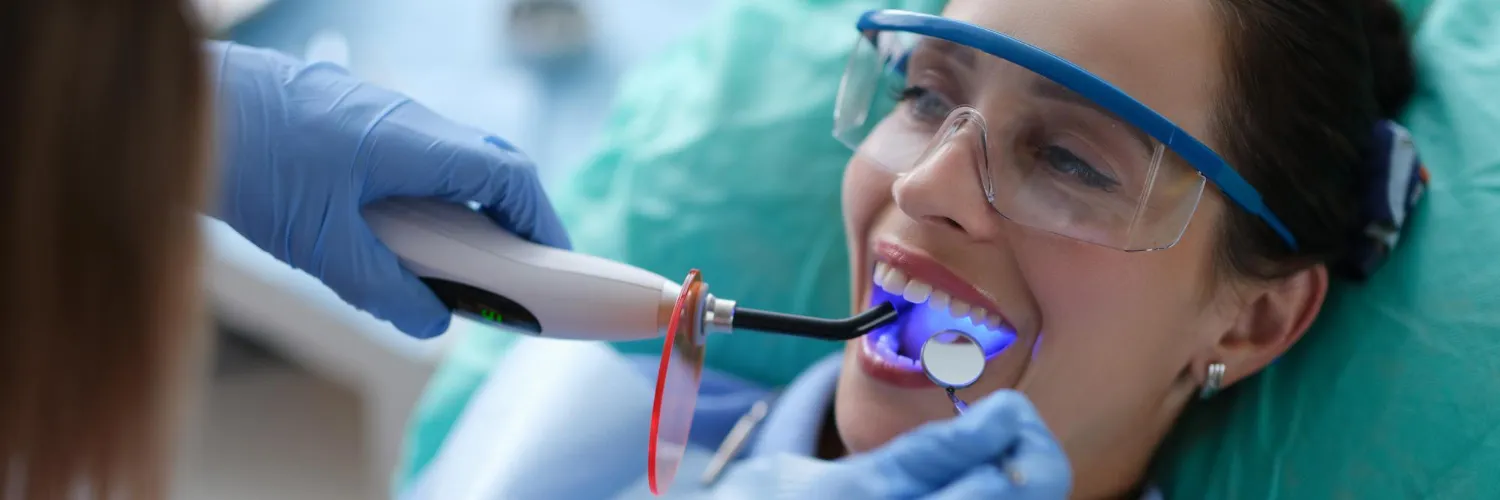
Activating Light Whitening: This is a process in which a special light is applied to the teeth after the whitening agents have been applied. The light activates the compound and helps accelerate the whitening process, making the teeth appear noticeably whiter very quickly.
Gel and Tray Whitening: This treatment may require several sessions and is typically used for patients who have deeper stains. The whitening gel is applied to the teeth and custom-fitted trays are often used to ensure that the whitening substance remains in close contact with the teeth for longer periods of time.
The In-Clinic Teeth Whitening Procedure
Before any treatment begins, dentists typically carry out an assessment of the health of the teeth and gums. They may perform a thorough cleaning of the teeth to ensure there is no plaque or tartar that could affect the whitening result. If there are other issues present (such as cavities or infections), it may be necessary to treat these before proceeding with the whitening.
Once the teeth have been cleaned, dentists protect the gums with a special material that shields them from the effects of the whitening substances. This is very important in order to prevent irritation or sensitivity of the gums.
The agents used for teeth whitening typically contain active compounds such as hydrogen peroxide or carbamide peroxide. This compound is capable of penetrating the outer and middle layers of the teeth to break down stains and whiten the teeth.
After the whitening substance has been applied, some clinics use technologies such as special light or laser to activate the whitening compound and accelerate the process. This helps the substance penetrate deeper into the tooth and deliver faster and more effective results.
Laser or special light whitening can last approximately 30 minutes to 1 hour, while the more traditional gel whitening method may require several different applications throughout the procedure.
After the treatment has been completed, dentists will assess the colour of the teeth and may apply a protective coating to safeguard them following the procedure. You may feel satisfied with the results after a single session, but for some patients it may be necessary to repeat the treatment in order to achieve the desired shade.